1,200+
FOOSAs practised
Repeated use in Raymond’s own practice has shaped the language, sequence and discipline of the method.
Raymond’s work sits in the territory of narrative-as-intervention: finding the story inside a problem, seeing what it is organising, and using narrative to open another possibility.
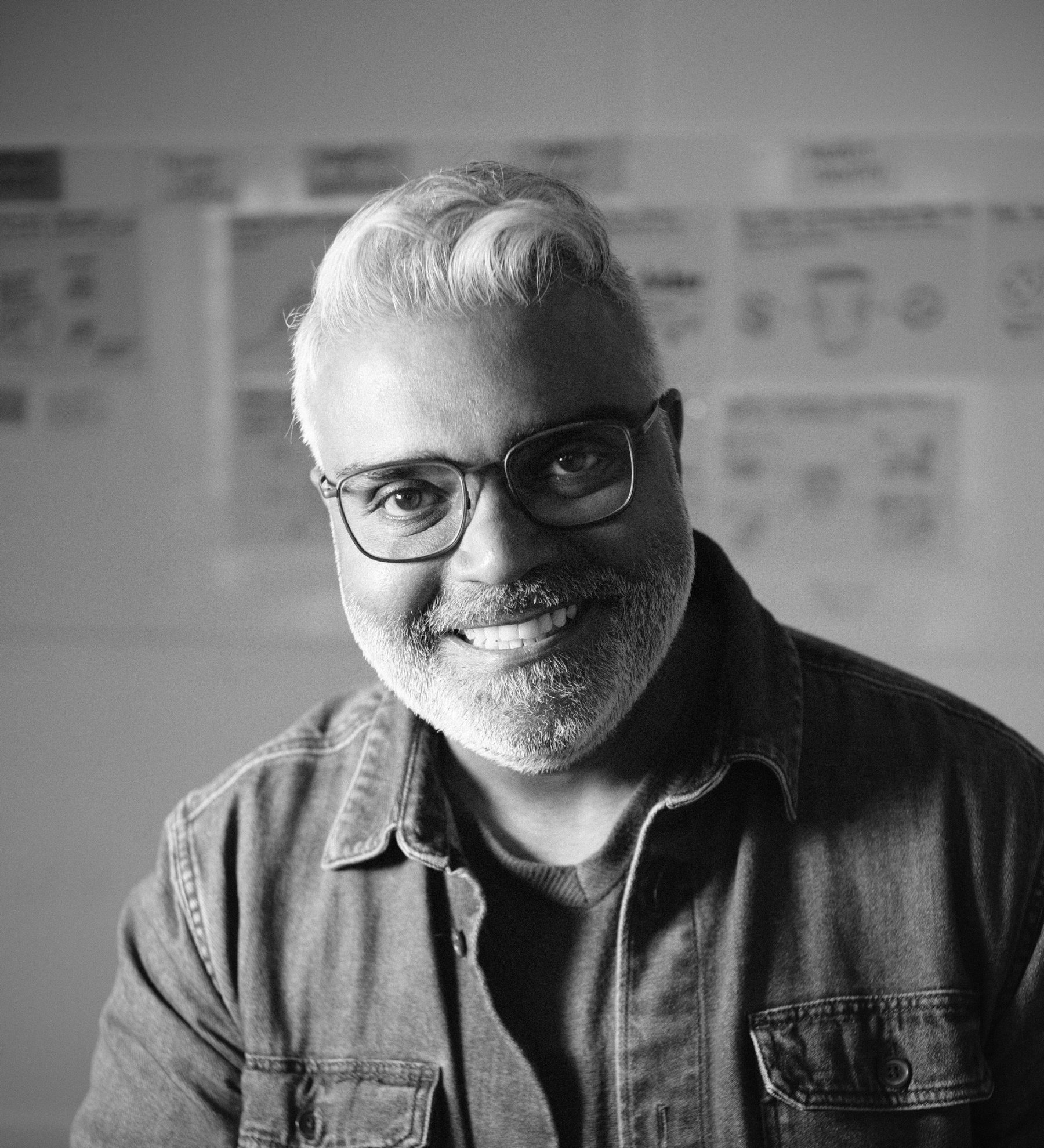
For more than two decades, Raymond has worked with story across leadership, organisations, education, theatre and film in Malaysia, the United States and Europe.
The earliest roots of FOOSA came from a screenwriting exercise: if a writer could identify the unconscious fear of the hero and name its opposite, they could begin to see the beginning and the end of the story.
Over time, that dramatic question moved from fictional characters to real decisions. What future is fear already predicting? What becomes visible if another direction is imagined? What obstacles would have to be faced? What action could begin to test the possibility in the real world?
Those questions became Fear. Opposite. Obstacles. Story. Action.
“Fear simulates a story about the future.”
FOOSA was not developed as theory first. It emerged through repeated use, observation and refinement.
Repeated use in Raymond’s own practice has shaped the language, sequence and discipline of the method.
Fear. Opposite. Obstacles. Story. Action. The structure is deliberately compact enough to remember and use again.
Leadership, organisations, education, theatre and film all sit underneath the practice without needing to complicate it.
Raymond’s distinctive contribution is not simply telling stories. It is noticing the stories people are already living inside — the assumptions, feared futures and meanings that shape what becomes visible.
In documentary and essay work, that means finding the deeply human story. In FOOSA, that same way of seeing becomes a structured intervention that helps leaders move toward action.
FOOSA has been practised repeatedly before being translated into a leadership learning experience.
The work is designed around questions, reflection and movement rather than a performance of expertise from the front of the room.
Raymond’s professional focus is the continued development and application of FOOSA — particularly in moments where an important change or decision should be moving, but isn’t.
If an important change is stalled, tell us what should be moving and who needs to move it.